Showing posts with label jinnah. Show all posts

March 9, 2010

Our Destiny


With the killing and arrests of over a dozen taliban commanders, the taliban have become an extinct force in Pakistan. Just late last year, they rocked our nation with barbaric suicide attacks that ripped through our nation. They harmed our lives and made it impossible for us to live, the way we wanted to live, in our own country. But today they are on the run and have no land, no support, and barely any force or power left in them. What caused their downfall? Lets just say they messed with the wrong people. In a nation where we don't let political leaders complete their terms in office [Shaukat Aziz being the only exception as he is the only Prime Minister in Pakistani history to complete his term in office] just because we THINK they might not want the best for us, What makes you think we would let some bastards who kill our women and children and attack our masjids to even breathe on our land. We are the descendants of the ruling families of south asia who created and controlled some of the greatest empires this world has ever seen. We will not tolerate any evil or scumbags like the taliban. The taliban might think that the attack on the FIA [Federal Investigation Agency] building in Lahore would weaken our will but they are mistaken; because we are only getting stronger with each scar they give us. We have secured Swat, South Waziristan, Bajaur, and now the city they turned into hell; Peshawar. And we will not stop till every bit of our nation is cleansed from horrific disease. For more than 62 years, we have been searching for the truth, seeking excellence, and beating every threat that comes our way. What makes the taliban think that they, a bunch of misguided infidels, will come in the way of our true destiny. The destiny that Jinnah saw, the destiny that God has planned for us, the destiny that God himself will one day hand to us when we are deserving enough. But until that day comes, no one will be able to dismay us. And we will crush every evil that comes our way; whether it is from the east or the west, or in this case both...

[Image: © AFP Photos]

December 25, 2009

'Tis The Day To Move Forward


Today is December 25, Just Christmas to the Rest of the world but for us Pakistanis it is much more. Today is the day Muhammad Ali Jinnah; the founder of our nation took foot in this earth. His sacrifices are well known and so is his hard work but one thing that people keep mentioning especially on this day is how Jinnah wanted Pakistan to be and how it would be different if he was alive. All I have to say is WAKE UP my people. As much as i hate to say this as i admire Jinnah greatly: Jinnah was nothing but an ordinary man with a dream. He's dream was to create Pakistan; a land that would protect and unite us Muslims from Indian cruelty in the future. As far as I see it his dream came true ,but sadly like everyone says he died too soon and left his dream incomplete. So shouldn't we take up the responsibility and make Pakistan better? Isn't that what he wanted? Isn't that what we all want? Jinnah is no more, so what! Like I said before, Jinnah was just an ordinary man with a dream, his niyyat (intentions) was pure and therefore God assisted him. Inshallah with God's help we can do the same, but we need to move on first and not just remember a man and his accomplishments but create our very own accomplishments and make our Pakistan; Land of the Pure, as pure as we can make It. Hope my message gets to all my brothers and sisters. Happy Birthday to Baba Jinnah and Merry Christmas to all the Christians in and out of Pakistan.

May 28, 2009

Hundreds of Exclusive Jinnah Pictures

I was searching online for pictures of young Pakistan and came across a great online album filled with over 300 unique pictures of Muhammad Ali Jinnah. As i admire Jinnah greatly i can tell you that these are very rare pics and very exclusive. Most of the pictures include a brief description of what is going on in the picture and/or when it was taken. The link is below and i highly recommend you go through them.

Muhammad Ali Jinnah Album

Here are some of my favorite pics from the album:

March 13, 2009

Zardari; Just Another Evil...

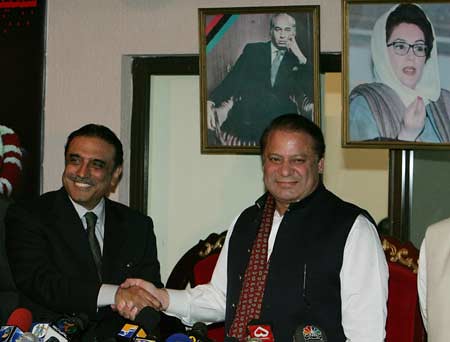
Tough times even get more tougher when we have corrupt leaders in power.. Currently our president is Asif Ali Zardari [widow of another corrupt leader: Benazir Bhutto] is one of the worst presidents Pakistan has ever had and is one of the most corrupt leaders Pakistan has ever witnessed.

Asif Ali Zardari's Corruption History:

- In 1990, Zardari was accused of threatening to kill a businessman with a remote-controlled bomb unless he withdrew money from a bank as pay-off.

-
Zardari earned the nickname, "Mr 10%" following allegations of corruption.

-
Zardari was released from jail in 1993 and became a government minister.

- From 1997 to 2004, Zardari was kept in jail on corruption charges and accusations of murder.

- Pakistani investigators accused Zardari and his wife Benazir for embezzling as much as US$1.5 billion from government accounts.

-
He was also accused of allegedly plotting the murder of Murtaza Bhutto, the brother of his wife Benazir Bhutto.

- While a candidate for parliament, a position for which a 2002 rule requires a college degree, Zardari claimed to have graduated from a college in London. It was revealed later that the college he listed never actually existed.

- Zardari was accused of money-laundering activities in a U.S. Senate report on private banking and money-laundering.

- Zardari was under criminal investigation in Switzerland over receipts of kickbacks from two Swiss-based companies while his wife, the late Benazir Bhutto, served as the country's prime minister in the 1990s, a Swiss judge and two Swiss lawyers close to the case told Newsweek. Judge Daniel Devaud continued investigations despite pressure from US officials.

- In Britain, the decade-old civil proceedings focus on Zardari. Zardari is accused of using illicit funds to acquire the 365-acre Rockwood estate, a $6.5-million property featuring a Tudor-style mansion and two adjoining farms in the Surrey district. The estate was bought and refurbished in 1995 through trusts in the Isle of Man and Liechtenstein, in addition to firms in the Caribbean linked to Bhutto, Zardari and the alleged kickbacks, according to the lawsuit. According to British court records, Zardari steadfastly denied ownership until January 2006, when he acknowledged he owned the property. The judge did rule that there is a “reasonable prospect” of proving that funds used to refurbish the estate were “the fruits of corruption,” according to the documents.

In 2005 before he even became president of Pakistan, Zardari was worth $1.8 billion. With his history of corruption and money laundering it is very unlikely he made that money in a legal manner. In these tough times and Pakistan being lead by a corrupt leader the only one to save us now is the Chief of Staff of the Pakistani Army: Afshaq Parvez Kayani. He is one of the few noble men that have control in Pakistan. Inshallah one day, Pakistan will see another Jinnah...
PAKISTAN ZINDABAD

February 16, 2009

Mohatta Palace

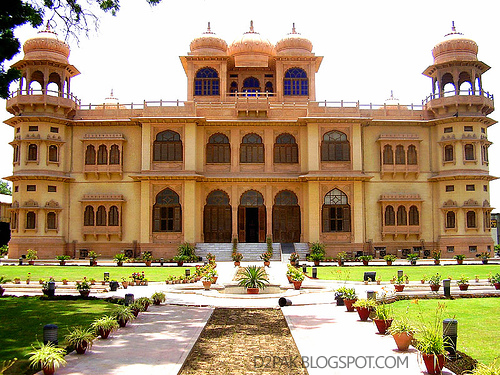
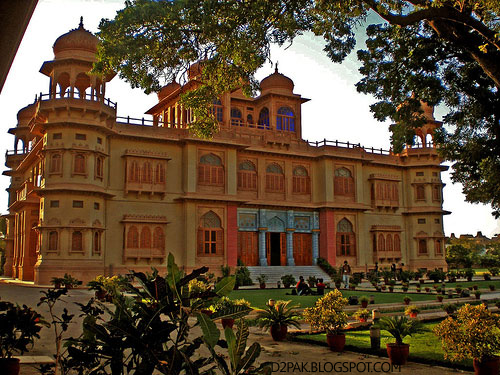
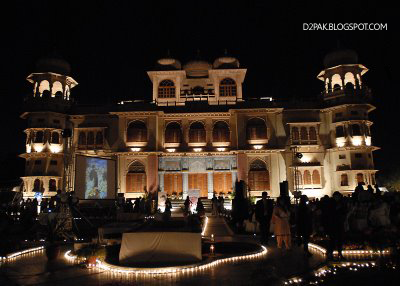
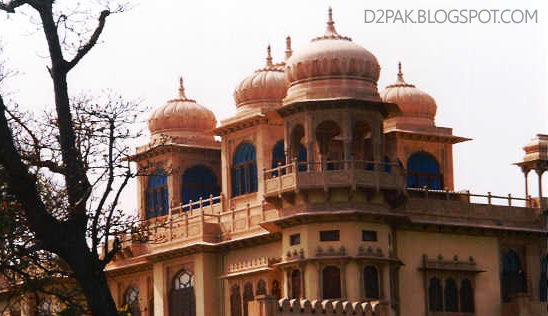
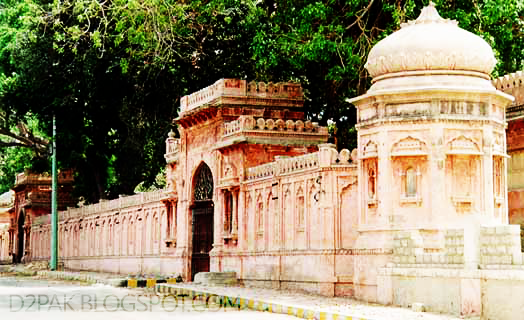
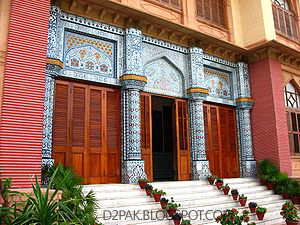
Mohatta Palace, Karachi is Anglo-Mughal architecture, was used to be a residence of Fatima Jinnah (sister of founder of Pakistan, Quai-e-Azam, Muhammad Ali Jinnah), she is still known as Maadar-e-Millat (Mother of Nation). In 1995, at the request of the Government of Sindh, Benazir Bhutto's government assigned Rs.70 million to the Culture Department of Sindh to purchase and restore the derelict palace and convert it into a museum.

For More Information Visit:
Mohatta Palace History

More Pics:
[Click 2 Enlarge]

February 10, 2009

Kashmir Conflict

The Kashmiri conflict is a major conflict between India and Pakistan and is the major cause of destabilization in the South Asian region.

Start Of The Conflict
When the partition occurred princely states had to choose weather they wanted to join Pakistan or India. Kashmir was at a complex situation where the people of Kashmir [mostly Muslim] opposed the Maharajah [Hari Singh] and wanted to join the newly created muslim-dominated pakistan. During the uncertain times which surrounded Partition in 1947, a revolt against the rule of the Maharajah broke out in the town of Poonch. The Poonch rebels formally declared themselves to be the state of Azad (Free) Kashmir. Fearing a successful revoulution, Maharaja Sir Hari Singh acceded to India on 27 October, 1947. Included in the Instrument of Accession was a special clause requiring a plebiscite to determine the wishes of the people once law and order had been reestablished. There is some question as to the chronology of the accession and of Indian intervention, including the fact that the Patiala brigade, officially troops of the Indian Union after that state's accession, was in Jammu and Kashmir prior to the accession of Jammu and Kashmir. These questions of timing and the need for a plebiscite lead to significant doubts about India's claim to the absolute legality of the Maharaja's accession in 1947. When informed of Kashmir's accession to India by the Hindu Raja [king] despite the muslims population's resistance, Pakistan's General-Governer Muhammad Ali Jinnah deemed the accession illegitimate and ordered the Pakistani army to enter Kashmir. However, Gen. Auchinleck, the supreme commander of all British officers informed Jinnah that if Pakistan's army persisted in kashmir, Auchinleck would remove all British officers from both sides. As Pakistan had a greater proportion of Britons holding senior command, Jinnah cancelled his order, but protested to the United Nations to intercede. Jinnah insisted that Indian troops must be withdrawn before a plebiscite could have any meaning, but Nehru insisted that, since the Maharaja's accession was legal and permanent, the Indians had a right to be in Jammu and Kashmir. During this diplomacy, the Gilgit region threw off the Maharaja's rule and declared itself a part of Pakistan. By May 1948, Indian forces began to press back the rebels and push towards the Poonch-West Punjab border. Seeing the Indian troops moving towards sovereign Pakistan, General Gracey allowed Pakistani regulars to officially assist the Azad Kashmir government, though at no stage during the first Kashmir war were Indian regulars out-numbered by Pakistani regulars. With the entry of Pakistani troops into the area, the first Indo-Pakistani war over Kashmir officially began.

India's Double Standards

India states that Pakistan does not have the right over Kashmir since the Maharajah acceded with India even if the majority of the Kashmiri Population was/is Muslim. Around the same time of this statement the Nawab of Junagadh who was a Muslim ruler acceded to Pakistan and India did not allow that and invaded Junagadh stating that the maharajah has no right to do that as most of the population of Junagadh was/is hindu. Pakistan protested saying that if India could acquire Kashmir (with an overwhelming Muslim majority) because its ruler had decided to accede to India, then Pakistan could claim Junagadh. Pakistan's protests went in vain. Also the Nizam of Hydrabad [India] also wanted to join Pakistan but the Indian government did not allow it to do so and invaded Hydrabad in 1948. Once again Pakistan was cheated...

Pak-Indo Wars Over Kashmir
Pakistan and India have fought 3 wars over Kashmir with Pakistan even with a much smaller Army freed roughly 1/3 of the region from India. The region still remains today as a disputed territory.

Kashmiri Resistance to Indian Rule
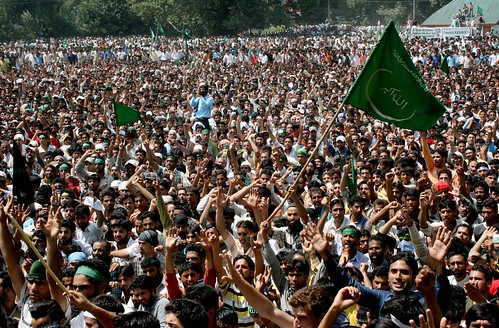
Throughout 60 years of Indian occupation of Kashmir the Kashmiri people have resisted the Indian rule. Violent groups have emerged in Kashmir valley near the late 80s to the early 21st century to fight the Indian troops [nearly 700,000 have been stationed in Indian Held Kashmir [IHK]]. The radical ways of these groups have lost influence over the last few years and the Kashmiri population is now holding peaceful protests throughout the region to end Indian suppression of the Kashmiri people and to kick India out of the region with more than hundreds of thousands of people showing up to support the rallies and chanting anti-India slogans while waiving Paksitani flags. According to the U.N resolutions India has to give the Kashmiri people a choice to weather join India or Pakistan or remain independent but India has yet to fulfill its promise and give the Kashmiri people their right to choose. India has recently held elections in the disputed region with a 65% turnout even after the boycotting of the election by several Kashmiri separatist groups. India states that as a success but several Kashmiris voters has been quoted saying that "that does not effect the fact that we want to be free from Indian rule."

Genocide In IHK

For more than 60 years of the Indian occupation of Kashmir the indian army has violated many human rights and performed a genocide to suppress the Kashmiri population.

From January 1989 The Indian army has
- Killed over 90,000 Kashmiri People
- Arrested 115,972 civilians
- Destroyed/Arsoned 105,682 Structures
- Widowed over 22,000 women
- Orphaned over 107,000 children
- Gang raped & molested 9,850 women

These violations of human rights by the Indian army continue even today. The Indian government and media has tried its best to hide this from the world [even its people] but many Kashmiri and Pakistani organizations in the world and the Pakistani and Azad Kashmir governments have publicized this inhuman act.

The Kashmiri people even to this day continue their struggle for independence from india and one day our voice will finally count...

For More Information Visit:
Arundhati Roy On The Kashmiri Issue
Kashmir Mission USA
Kashmir Media Service
Kashmir Speaks Blog
and feel free to search up documentaries and videos on the net posted up by Kashmiri protestors.

February 8, 2009

Pakistani Cinema

Cinema
Immediately following the partition, the newly found Pakistan faced a brain drain where all its highly talented and skilled workers migrated to India, including most actors and directors. Shortage of filming equipment further paralysed the nation's film industry. With much hardships faced, the new film industry was able to produce its first feature film, Teri Yaad on August 1948. The following year, Evernew Studios established a studio in the country which would later become the largest film company of the time. Over the next few years, films that were released reached mediocre success until the release of Do Ansoo on 7 April 1950. Do Ansoo became the first film to attain a 25-week viewing making it the first film to reach silver jubilee status. Recovery was evident with Noor Jehan's directorial debut Chanwey releasing on 29 April 1951. The film became the first film to be directed by a female director. As cinema viewership increased, Sassi released on 3 June 1954 reached golden jubilee status staying on screens for 50-weeks. Umar Marvi released on 12 March 1956 became the first ever Pakistani film made in the Sindhi language. To celebrate the success of these endeavours, film journalist Ilyas Rashidi launched an annual awarding event on July 17, 1958. Named Nigar Awards, the event is since then considered Pakistan's premier awarding event celebrating outstanding performance in various categories of film making. The '60s decade is often cited as being the golden age of cinema in Pakistan. Many A-stars were introduced in this period in time and became legends on the silver screen. As black-and-white became obsolete, Pakistan saw the introduction of first color films. In September 1965, following an armed conflict between India and Pakistan, all Indian films were taken off the screen from cinemas in Pakistan and a complete ban was imposed on the Indian films. Pakistani cinemas did not suffer much from the decision to remove the films and instead received better viewership for their films. Realising the potential, Waheed Murad stepped into the industry. His persona led people to call him the chocolate hero and in essence, he became the Marlon Brando and Elvis Presley of Pakistan. Following the civil war, Pakistani film industry lost its Dacca wing and number of cinema decreased rapidly. The period saw the exodus of more influential workers in the industry left for the newly found Bangladesh. This caused another serious brain drain since the partition of India. Veterans like Runa Laila departed for Bangladesh and the Pakistani industry was at the brink of disaster yet again. he mid-1970s saw the introduction of video cassette recorders in Pakistan and instantly films from all over the world were copied onto tape, and attendance at cinemas decreased when people preferred to watch films in the comfort of their homes. This ushered the birth of the film piracy industry films began to be copied on tapes on the day they premiered in cinemas. While the industry was revolutionising, Pakistan's government was in a state of turmoil. Aina, released on 18 March 1977, marked a distinct symbolic break between the so called liberal Zulfikar Ali Bhutto years and the increasingly conservative cum revolutionary Muhammad Zia-ul-Haq regime. The film stayed in cinemas for over 400 weeks at the box office, with its last screening at 'Scala' in Karachi where it ran for more than four years. It is considered the most popular film in the country's history to date. Following Muhammad Zia-ul-Haq's military coup, he began to Islamicize the country and one of the very first victims of this socio-political change included the film industry. Imposition of new registration laws for film producers requiring filmmakers to be degree holders, where not many were, led to a steep decline in the workings of the industry. The government forcibly cloed most of the cinemas in Lahore. New tax rates were introduced, further decreasing cinema attendances. At the starts of the 1990s, Pakistan's film industry was gripped with certain doom. Of the several studios only 11 were operational in the '70s and '80s producing around 100 films annually. This number would lower further as studio went towards producing short-plays and television commercials and let the industry astray in the wake of cable television. By the early '90s, the annual output dropped to around 40 films, all produced by a single studio. Other productions would be independent of any studio usually financed by the filmmakers themselves. The local industry succeeded to gain audience attention however in the mid and late-1990s. With Syed Noor's Jeeva and Samina Peerzada's Inteha, it seemed the cinema of Pakistan was headed towards a much needed revival but naught attendance recorded at the box-office for later ventures ushered a complete and utter collapse of the industry.

Controversy raged over the filming of Jinnah in the late 1990s, a film produced by Akbar Salahuddin Ahmed and directed by Jamil Dehlavi. Objections were raised over the choice of actor Christopher Lee as the protagonist depicting Muhammad Ali Jinnah and inclusion of Indian Shashi Kapoor as archangel Gabriel in the cast combined with the experimental nature of the script. Of all the controversies and hearsay, the film proved a point that Indian and Pakistani filmmakers and actors can collaborate together on any such cinematic ventures without the ban being lifted. Later years would see more actors travels traveling in and across the border on further cross-border ventures. The year 1998 saw the release of Noor's Choorian, a Punjabi film that grossed 180 million rupees. Directors realized there was still hope and Javed Sheikh's Yeh Dil Aap Ka Huwa released in 2002 grossing over 200 million rupees (US $3.4 million) across Pakistan. The monetary prospects were then realized fully and for the first time in 12 years, investors starting taking keen interest in Pakistani films. However, the short period of successes in the industry could not keep the cinemas afloat, and the same industry that at one time produced more than a 100 films annually a decade ago was now reduced to merely 32 per year, in the year 2003, with only one partial success called Larki Panjaban] (A Punjabi Girl). In early 2003, young filmmakers took on a stance to demonstrate that high quality content could be produced by the local film industry using he limited resources available. Cinema was declining in all major cities of the nation and a need for revival was echoed in the media. With privatisation of television stations in full swing, a new channel Filmazia was broadcast, primarily to broadcast films and productions made indigenously in the country. It was during this time that Mahesh Bhatt, a celebrated Indian director visited Pakistan looking for talent, particularly singers who could lend their voices to his upcoming films in India. His visit to Pakistan was to attend the third Kara Film Festival, for the screenings of his film Paap in Karachi. Bhatt would later hire Atif Aslam for the soundtrack of his film Zeher and Pakistani actress Meera to play a lead-role in one of his films.

Geo Films, a subsidiary of Geo TV took on itself to invest in upcoming Pakistani directorial ventures and dubbed their efforts “Revival of Pakistani Cinema” and on 20 July 2007 released Shoaib Mansoor's cinematic directorial debut Khuda Ke Liye (In The Name of God). The film would later become the first ever Pakistani film since the imposition of the ban in 1965 to be released simultaneously in India and Pakistan. With its general release in India, the four decade ban was finally lifted. The film was released in more than a 100 cinemas in 20 cities in India. Another directorial début by director Omar Ali Khan, Zibahkhana aka Hell's Ground premièred at festivals throughout the world gaining repute as the ‘first extreme-horror gore flick’ and received accolade wherever it screened. The film ushered a revival in the horror genre for Pakistani films. The film would also be the first Pakistani film shot on HD. Where the horror genre seems to have been reincarnated in the industry, Freedom Sound, a science fiction film would use the computer-generated special effects for the first time since 1989's Shaani. The recent successes of issue-centered Pakistani films such has Khuda Ke Liye prompted director Mehreen Jabbar to come forth with her installment with the release of Ramchand Pakistani which marked the first true efforts of international collaboration towards the revival of cinema in Pakistan. Pakistani cinema is now reviving and fresh talent is being produced as we speak.

February 2, 2009

Muhammad Ali Jinnah

Muhammad Ali Jinnah is the founder father of Pakistan. Jinnah was born on December 25, 1876 in Karachi, British India. Jinnah was the eldest of seven children born to Mithibai and Jinnahbhai Poonja. His father was a Gujarati merchant and moved to Sindh before Jinnah's birth. During his childhood days jinnah was a restless student and studied at many schools. When jinnah was 16 he was offered an apprenticeship at the London office of Graham's Shipping and Trading Company, a business that had extensive dealings with Jinnahbhai Poonja's firm in Karachi. before he left for England,at his mother's will her married his distant cousin: Emibai Jinnah who was two years junior.The marriage was not to last long: a few months later, Emibai died [This affected Jinnah deeply and he did no get married again until the age of 42]. Later, during his studies in England, his mother also passed away. In London, Jinnah soon left the apprenticeship to instead study law, by joining Lincoln's Inn. The welcome board of the Lincoln's Inn had the names of the world's all time top ten magistrates. This list was led by the name of Muhammad, which was the sole reason of Jinnah's joining of Lincoln's Inn. He In three years, at age 19, he became the youngest Indian to be called to the bar in England. Around this time, Jinnah also became interested in politics. During the final period of his stay in England, Jinnah came under considerable pressure when his father's business was ruined. Settling in Mumbai, he became a successful lawyer-gaining particular fame for his skilled handling of the "Caucus Case".

In 1896, Jinnah joined the Indian National Congress, which was the largest Indian political organisation. Like most of the Congress at the time, Jinnah did not favor outright independence, considering British influences on education, law, culture and industry as beneficial to India. Jinnah had initially avoided joining the All India Muslim League, founded in 1906, regarding it as too Muslim oriented. Eventually, he joined the league in 1913 and became the president at the 1916 session in Lucknow. Jinnah was the architect of the 1916 Lucknow Pact between the Congress and the League, bringing them together on most issues regarding self-government and presenting a united front to the British. In 1918, Jinnah married his second wife Rattanbai Petit ("Ruttie"), 24 years his junior. She was the fashionable young daughter of his personal friend Sir Dinshaw Petit, of an elite Parsi family of Mumbai. Unexpectedly there was great opposition to the marriage from Rattanbai's family and Parsi society, as well as orthodox Muslim leaders. Rattanbai defied her family and nominally converted to Islam, adopting (though never using) the name Maryam Jinnah -resulting in a permanent estrangement from her family and Parsi society. The couple resided in Mumbai, and frequently travelled across India and Europe. In 1919 she bore Jinnah his only child, daughter Dina Jinnah. Jinnah's problems with the Congress began with the rising popularity of Mohandas Gandhi in 1918, who publisized non-violent civil disobedience and Hindu values as the best means to obtain independence for all South Asians. Jinnah differed, saying that only constitutional struggle could lead to independence. By 1920, Jinnah resigned from the Congress, with prophetic warning that Gandhi's method of mass struggle would lead to divisions between Hindus and Muslims and within the two communities. In 1927, Jinnah entered negotiations with Muslim and Hindu leaders on the issue of a future constitution, during the struggle against the all-British Simon Commission. The League wanted separate electorates while the Nehru Report favored joint electorates. Jinnah personally opposed separate electorates, but then drafted compromises and put forth demands that he thought would satisfy both. These became known as the 14 points of Mr. Jinnah. However, they were rejected by the Congress and other political parties. Jinnah's personal life and especially his marriage suffered during this period due to his political work. Although he and his wife worked to save their marriage by traveling together to Europe when he was appointed to the Sandhurst committee, the couple separated in 1927. Jinnah was deeply saddened when Rattanbai died 2 years later by a serious illness. At the Round Table Conferences in London, Jinnah was disillusioned by the breakdown of talks. Frustrated with the disunity of the Muslim League, he decided to quit politics and practice law in England. Jinnah would receive personal care and support through his later life from his sister Fatima Jinnah, who lived and traveled with him and also became a close advisor. She helped raise his daughter, who was educated in England and India. Jinnah later became estranged from his daughter, Dina Jinnah, after she decided to marry Parsi-born Christian businessman, Neville Wadia stating that she should marry a muslim [when she said her mother was parsi as well, Jinnah stated that her mother became muslim before their marraige]. Jinnah continued to correspond cordially with his daughter, but their personal relationship was strained. Dina continued to live in India with her family.

[Jinnah with Fatima Jinnah [left] & Dina Jinnah [right]]

Prominent Muslim leaders like the Aga Khan, Choudhary Rahmat Ali and Sir Muhammad Iqbal made efforts to convince Jinnah to return to India and take charge of a now-reunited Muslim League. In 1934 Jinnah returned and began to re-organise the party, being closely assisted by Liaquat Ali Khan, who would act as his right-hand man. In a speech to the League in 1930, Sir Muhammad Iqbal mooted an independent state for Muslims in "northwest India." Choudhary Rahmat Ali published a pamphlet in 1933 advocating a state called "Pakistan". Following the failure to work with the Congress, Jinnah, who had embraced separate electorates and the exclusive right of the League to represent Muslims, was converted to the idea that Muslims needed a separate state to protect their rights. Jinnah came to believe that Muslims and Hindus were distinct nations, with unbridgeable differences-a view later known as the Two Nation Theory. Jinnah declared that a united India would lead to the marginalization of Muslims, and eventually a civil war between Hindus and Muslims. On June 16, 1946 the 1946 British Cabinet Mission to India released a plan that called for the separation of South Asia along religious lines, with princely states to choose between joining India or Pakistan or to stay independent. The congress rejected the plan and after many events and actions raised by muslims leage the congress decided that an independent Pakistan was the only way of avoiding political chaos and possible civil war. After a much heated and emotional debate, the Congress approved the plan. The North-West Frontier Province voted to join Pakistan in a referendum in July 1947. Jinnah asserted in a speech in Lahore on October 30, 1947 that the League had accepted independence of Pakistan because "the consequences of any other alternative would have been too disastrous to imagine. Along with Liaquat Ali Khan and Abdur Rab Nishtar, Muhammad Ali Jinnah represented the League in the Division Council to appropriately divide public assets between India and Pakistan.
Jinnah became the first Governor-General of Pakistan and president of its constituent assembly. Inaugurating the assembly on August 11, 1947, Jinnah spoke of an inclusive and pluralist democracy promising equal rights for all citizens regardless of religion, caste or creed. This address is a cause of much debate in Pakistan as, on its basis, many claim that Jinnah wanted a secular state while supporters of Islamic Pakistan assert that this speech is being taken out of context when compared to other speeches by him. The office of Governor-General was ceremonial, but Jinnah also assumed the lead of government. The first months of Pakistan's independence were absorbed in ending the intense violence that had arisen in the wake of acrimony between Hindus and Muslims. Jinnah agreed with Indian leaders to organise a swift and secure exchange of populations in the Punjab and Bengal. He visited the border regions with Indian leaders to calm people and encourage peace, and organised large-scale refugee camps. Despite these efforts, estimates on the death toll vary from around two hundred thousand, to over a million people. Jinnah was personally affected and depressed by the intense violence of the period. When informed of Kashmir's accession to India by the Hindu Raja [king] despite the muslims population's resistance, Jinnah deemed the accession illegitimate and ordered the Pakistani army to enter Kashmir. However, Gen. Auchinleck, the supreme commander of all British officers informed Jinnah that if Pakistan's army persisted in kashmir, Auchinleck would remove all British officers from both sides. As Pakistan had a greater proportion of Britons holding senior command, Jinnah cancelled his order, but protested to the United Nations to intercede. Owing to his role in the state's creation, Jinnah was the most popular and influential politician. He played a pivotal role in protecting the rights of minorities, establishing colleges, military institutions and Pakistan's financial policy. He also worked for an agreement with India settling disputes regarding the division of assets. Through the 1940s, Jinnah suffered from tuberculosis; only his sister and a few others close to him were aware of his condition. Even with failing health he did what he could for his people. In 1948, Jinnah's health began to falter, hindered further by the heavy workload that had fallen upon him following Pakistan's independence from British Rule. Attempting to recuperate, he spent many months at his official retreat in Ziarat, but died on September 11, 1948 (just over a year after independence) from a combination of tuberculosis and lung cancer.

His funeral was followed by the construction of a massive mausoleum-Mazar-e-Quaid in Karachi to honour him; official and military ceremonies are hosted there on special occasions. Funeral prayers were led by Allamah Shabbir Ahmad Usmani for the general public, mostly Sunni, at Jinnah's request. Jinnah did have a private Namaz-e-Janaza at Kharadar which was attended by close relatives and people from the Shia community. Although when asked by an individual in his lifetime if he [Jinnah] was sunni or shia he stated "What sect did Prophet Muhammad [May peace be upon him] belong to?"

January 30, 2009

Pakistani History

Pre-Independence & Creation


Pakistan is land to some of the oldest civilizations known to man and was the site of several ancient cultures including the Neolithic Era Mehrgarh and the Bronze Era Indus Valley Civilization (2500 BCE – 1500 BCE) at Harappa and Mohenjo-Daro. Waves of conquerors and migrants from the west — including Harappan, Indo-Aryan, Persian, Greek, Saka, Parthian, Kushan, Hephthalite, Afghan, Arab, Turkics and Mughal  settled in the region throughout the centuries, influencing the locals and being absorbed among them. In 712 Common Era, the Arab general Muhammad bin Qasim conquered Sindh and Multan in southern Punjab. The Pakistan government's official chronology states that "its foundation was laid" as a result of this conquest. This Arab and Islamic victory would set the stage for several successive Muslim empires in South Asia, including the Ghaznavid Empire, the Ghorid Kingdom, the Delhi Sultanate and the Mughal Empire. During this period, Sufi missionaries played a pivotal role in converting a majority of the regional Buddhist and Hindu population to Islam. The gradual decline of the Mughal Empire in the early eighteenth century provided opportunities for the Afghans, Balochis and Sikhs to exercise control over large areas until the British East India Company gained control over South Asia. Although the region advanced in many ways under the British Rule, the locals eventually resisted foriegn rule over their land. The 1857 War of Independence, also known as the Sepoy Mutiny, was the region's last major armed struggle against British Raj and it laid the foundations for the generally unarmed freedom struggle, led by the Hindu-majority Indian National Congress in the twentieth century. The All India Muslim League rose to popularity in the late 1930s amid fears of under-representation and neglect of Muslims in politics. Led by Muhammad Ali Jinnah and the Muslim League the Pakistan movement resulted in the independence and creation of the state of Pakistan. The name Pakistan stands for "Land of Pure" in both urdu and farsi. It was coined in 1934 as Pakstan by Choudhary Rahmat Ali, who published it in his pamphlet "Now or Never" [Pakistan Declaration].The name represented the "thirty million muslims of PAKISTAN, who live in the 5 Northern Units of British India—
Punjab,
Afghania (now known as North-West Frontier Province & FATA),
Kashmir,
Sindh, and
BalochisTAN.
Post Independence
The modern state of Pakistan was established on August 14, 1947 with 2 wings: East Pakistan [now Bangladesh] & West Pakistan [modern day Pakistan]. [See Image Below]


From 1947 to 1956, Pakistan was a Dominion in the Commonwealth of Nations. It officially became a republic in 1956 but civilian rule was stalled by a coup d’état by General Ayub Khan, who was president during 1958–69, a period of internal instability and a second war with India in 1965. His successor, Yahya Khan (1969–71) had to deal with a devastating cyclone — which caused 500,000 deaths in East Pakistan — and also face a civil war in 1971. With incredible interference from India [India was also involved causing economical and political instability in East Pakistan], East Pakistan successfully seceded from West Pakistan and created a nation of Bangladesh. Civilian rule resumed in Pakistan from 1972 to 1977 under Zulfikar Ali Bhutto, until he was deposed and later sentenced to death (in charges of murder) in 1979 by General Zia-ul-Haq [Pakistan's 3rd military president]. Zia introduced the Islamic Sharia legal code, which increased religious influences on the civil service and the military. With the death of President Zia in a plane crash in 1988, Benazir Bhutto, daughter of Zulfikar Ali Bhutto, was elected as the first female Prime Minister of Pakistan. Over the next decade, she fought for power with Nawaz Sharif as the country's political and economic situation worsened. Military tensions in the Kargil conflict with India was followed by a Pakistani military coup d'état in 1999 in which General Pervez Musharraf assumed executive powers. In 2001, Musharraf became President after the controversial resignation of Rafiq Tarar. On 15 November 2007 the National Assembly completed its tenure and new elections were called. The exiled political leaders Benazir Bhutto and Nawaz Sharif were permitted to return to Pakistan. However, the assassination of Benazir Bhutto in December during election campaign led to postponement of elections and nationwide riots. Bhutto's Pakistan Peoples Party (PPP) won most number of seats in the elections held in February, 2008 and its member Yousaf Raza Gillani was sworn in as Prime Minister. On 18 August, 2008 Pervez Musharaff resigned from the presidency when faced with impeachment.

TO ADD A COMMENT CLICK ON THE COMMENTS LINK UNDER NEW POST