

 Posts
Posts



Pre-Independence & Creation
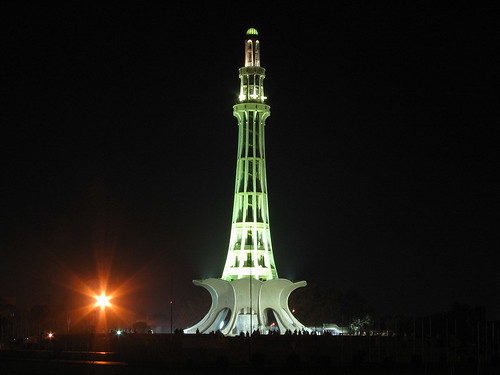
Pakistan is land to some of the oldest civilizations known to man and was the site of several ancient cultures including the Neolithic Era Mehrgarh and the Bronze Era Indus Valley Civilization (2500 BCE – 1500 BCE) at Harappa and Mohenjo-Daro. Waves of conquerors and migrants from the west — including Harappan, Indo-Aryan, Persian, Greek, Saka, Parthian, Kushan, Hephthalite, Afghan, Arab, Turkics and Mughal settled in the region throughout the centuries, influencing the locals and being absorbed among them. In 712 Common Era, the Arab general Muhammad bin Qasim conquered Sindh and Multan in southern Punjab. The Pakistan government's official chronology states that "its foundation was laid" as a result of this conquest. This Arab and Islamic victory would set the stage for several successive Muslim empires in South Asia, including the Ghaznavid Empire, the Ghorid Kingdom, the Delhi Sultanate and the Mughal Empire. During this period, Sufi missionaries played a pivotal role in converting a majority of the regional Buddhist and Hindu population to Islam. The gradual decline of the Mughal Empire in the early eighteenth century provided opportunities for the Afghans, Balochis and Sikhs to exercise control over large areas until the British East India Company gained control over South Asia. Although the region advanced in many ways under the British Rule, the locals eventually resisted foriegn rule over their land. The 1857 War of Independence, also known as the Sepoy Mutiny, was the region's last major armed struggle against British Raj and it laid the foundations for the generally unarmed freedom struggle, led by the Hindu-majority Indian National Congress in the twentieth century. The All India Muslim League rose to popularity in the late 1930s amid fears of under-representation and neglect of Muslims in politics. Led by Muhammad Ali Jinnah and the Muslim League the Pakistan movement resulted in the independence and creation of the state of Pakistan. The name Pakistan stands for "Land of Pure" in both urdu and farsi. It was coined in 1934 as Pakstan by Choudhary Rahmat Ali, who published it in his pamphlet "Now or Never" [Pakistan Declaration].The name represented the "thirty million muslims of PAKISTAN, who live in the 5 Northern Units of British India—
Punjab,
Afghania (now known as North-West Frontier Province & FATA),
Kashmir,
Sindh, and
BalochisTAN.
Post Independence

The modern state of Pakistan was established on August 14, 1947 with 2 wings: East Pakistan [now Bangladesh] & West Pakistan [modern day Pakistan]. [See Image Below]
From 1947 to 1956, Pakistan was a Dominion in the Commonwealth of Nations. It officially became a republic in 1956 but civilian rule was stalled by a coup d’état by General Ayub Khan, who was president during 1958–69, a period of internal instability and a second war with India in 1965. His successor, Yahya Khan (1969–71) had to deal with a devastating cyclone — which caused 500,000 deaths in East Pakistan — and also face a civil war in 1971. With incredible interference from India [India was also involved causing economical and political instability in East Pakistan], East Pakistan successfully seceded from West Pakistan and created a nation of Bangladesh. Civilian rule resumed in Pakistan from 1972 to 1977 under Zulfikar Ali Bhutto, until he was deposed and later sentenced to death (in charges of murder) in 1979 by General Zia-ul-Haq [Pakistan's 3rd military president]. Zia introduced the Islamic Sharia legal code, which increased religious influences on the civil service and the military. With the death of President Zia in a plane crash in 1988, Benazir Bhutto, daughter of Zulfikar Ali Bhutto, was elected as the first female Prime Minister of Pakistan. Over the next decade, she fought for power with Nawaz Sharif as the country's political and economic situation worsened. Military tensions in the Kargil conflict with India was followed by a Pakistani military coup d'état in 1999 in which General Pervez Musharraf assumed executive powers. In 2001, Musharraf became President after the controversial resignation of Rafiq Tarar. On 15 November 2007 the National Assembly completed its tenure and new elections were called. The exiled political leaders Benazir Bhutto and Nawaz Sharif were permitted to return to Pakistan. However, the assassination of Benazir Bhutto in December during election campaign led to postponement of elections and nationwide riots. Bhutto's Pakistan Peoples Party (PPP) won most number of seats in the elections held in February, 2008 and its member Yousaf Raza Gillani was sworn in as Prime Minister. On 18 August, 2008 Pervez Musharaff resigned from the presidency when faced with impeachment.


